
刑事侦缉档案2
普京凌晨抵京,2天行程安排满档,急赴中国有何所求?_我的网站

一 |
北京时间5月16日凌晨4点左右,俄罗斯总统普京抵达北京。根据新华社发出的通稿,今天上午,中国领导人已经与普京举行了会谈。 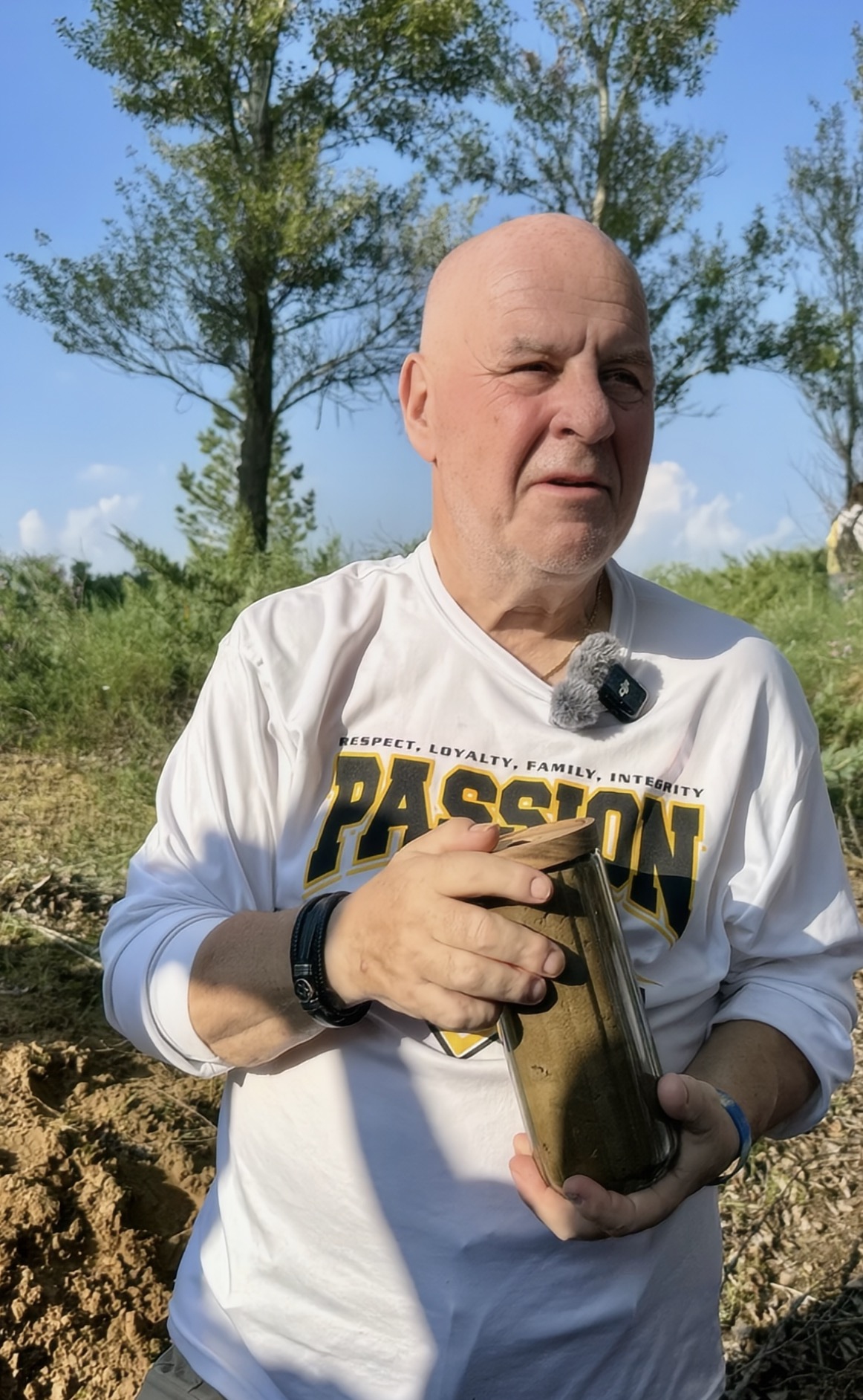
On Monday afternoon, Ronald Sakolsky, an American teacher, set foot once again on the soil of the Mu Us Desert, in the Uxin Banner of Ordos, North China’s Inner Mongolia Autonomous Region. He first came here in 2000. Back then, the land was little more than drifting sand. Today, it is green with trees – a transformation driven by decades of local effort.
He stood within Sakolsky Forest, a woodland formally named to honor his early donation toward local ecological restoration. There, he carried out a plan he had held long before this trip: filling a jar with sand from the desert to bring home to the US.
More than two decades ago, sand was the one thing this place had in abundance. In 1999, when Sakolsky arrived in China as a participant in a bilateral teacher exchange program, he was moved by the tireless efforts of Chinese desert fighter Yin Yuzhen and her husband to curb desertification in the Mu Us Desert. He raised $5,000 – equivalent in 1999 to three years of income for Yin’s entire family – to fund their local tree-planting initiative.
The young saplings bought with that donation have since matured into more than 50,000 full-grown trees, transforming the once desolate, sandy wasteland into a thriving green landscape.
When Sakolsky met Yin at the airport on Sunday, 26 years after his first visit to Inner Mongolia, he joked that he could not take a tree from the Mu Us Desert, but he could slip some sand into his shoes and carry a piece of the land back with him. Now, he had found exactly the sand he wanted – not just any sand, but from a place where persistence had turned desert into life, and where his own name had become part of that story.
“Promise is a promise,” he said. “Ms. Yin made a promise, and she fulfilled it.”
For Sakolsky, the sand is not just dirt. It is a metaphor, a bridge, a shared ground. He plans to tell his grandchildren what it means. “It’s not just a piece of sand in the jar,” he said. “It’s a jar of love.”
He used the jar of sand to symbolize that America and China share a relationship rooted in the same soil. He shook the jar, holding its two ends as if they were the two countries, and said that it shows we’re all on the same planet.
There is an old American joke, he noted, that if you dig a hole deep enough, you will eventually reach China. “We’re all on the same planet,” he said.
Earlier that day, while visiting Yin’s home, he spoke about the need for Americans and Chinese to see each other as family. “All Americans should understand that Chinese people and Americans can be family,” he said. “We can transcend differences if we focus on our common ground. We all love our countries, and we all value loyalty and respect – these are the shared virtues we hold dear.”
As for the sand he collected, Sakolsky said he would treat it as a treasure, alongside all his other precious keepsakes from China. He expects to display it in his living room – a daily reminder of the forest that carries his name and the people who made it grow.
。
On Monday afternoon, Ronald Sakolsky, an American teacher, set foot once again on the soil of the Mu Us Desert, in the Uxin Banner of Ordos, North China’s Inner Mongolia Autonomous Region. He first came here in 2000. Back then, the land was little more than drifting sand. Today, it is green with trees – a transformation driven by decades of local effort.
He stood within Sakolsky Forest, a woodland formally named to honor his early donation toward local ecological restoration. There, he carried out a plan he had held long before this trip: filling a jar with sand from the desert to bring home to the US.
More than two decades ago, sand was the one thing this place had in abundance. In 1999, when Sakolsky arrived in China as a participant in a bilateral teacher exchange program, he was moved by the tireless efforts of Chinese desert fighter Yin Yuzhen and her husband to curb desertification in the Mu Us Desert. He raised $5,000 – equivalent in 1999 to three years of income for Yin’s entire family – to fund their local tree-planting initiative.
The young saplings bought with that donation have since matured into more than 50,000 full-grown trees, transforming the once desolate, sandy wasteland into a thriving green landscape.
When Sakolsky met Yin at the airport on Sunday, 26 years after his first visit to Inner Mongolia, he joked that he could not take a tree from the Mu Us Desert, but he could slip some sand into his shoes and carry a piece of the land back with him. Now, he had found exactly the sand he wanted – not just any sand, but from a place where persistence had turned desert into life, and where his own name had become part of that story.
“Promise is a promise,” he said. “Ms. Yin made a promise, and she fulfilled it.”
For Sakolsky, the sand is not just dirt. It is a metaphor, a bridge, a shared ground. He plans to tell his grandchildren what it means. “It’s not just a piece of sand in the jar,” he said. “It’s a jar of love.”
He used the jar of sand to symbolize that America and China share a relationship rooted in the same soil. He shook the jar, holding its two ends as if they were the two countries, and said that it shows we’re all on the same planet.
There is an old American joke, he noted, that if you dig a hole deep enough, you will eventually reach China. “We’re all on the same planet,” he said.
Earlier that day, while visiting Yin’s home, he spoke about the need for Americans and Chinese to see each other as family. “All Americans should understand that Chinese people and Americans can be family,” he said. “We can transcend differences if we focus on our common ground. We all love our countries, and we all value loyalty and respect – these are the shared virtues we hold dear.”
As for the sand he collected, Sakolsky said he would treat it as a treasure, alongside all his other precious keepsakes from China. He expects to display it in his living room – a daily reminder of the forest that carries his name and the people who made it grow.
。
接下来,我将从宏观、地缘、战略的大格局出发,分析中国与俄罗斯的综合关系未来走向。
此外,我也会从微观的角度,解构最近的中美、中欧、中俄、俄罗斯和西方关系。因为除了大的宏观格局,其中一些微观的内容也值得分析,甚至我也可以说说有些微妙的地方。
北京和莫斯科的时间相差5个小时,北京时间凌晨4点对应的是莫斯科时间昨晚11点,加上飞机从莫斯科到北京的几个小时航程,说明普京昨天下班后就直接去赶飞机了,行程非常繁忙。
普京今日凌晨4点抵达北京,我原本预估他上午会稍作休息,下午才开始正式的官式行程,但没想到他今天上午就和中国领导人见面了。

二 |
换句话说,他在飞机上休息了几个小时,下飞机之后再休整一两个小时之后,就开始了一天繁忙的工作行程。
这说明无论是中国领导人还是普京,他们的日程安排极为紧凑。

三 | 从这个意义上说,我们大概率可以研判,今明两天,他们的工作行程会排得满满当当。
今天上午,中俄双方领导人已经见面了,那么从今天下午开始,可能会展开一系列有关外交、军事、科技、企业、地方等各个部门的磋商,并签署一系列协议。

四 | 所有的这些,加起来也就三个“半天”的时间,明天工作日结束后,普京将返回俄罗斯。
大家都知道,这是普京第五任期后的首次出访。而在不久前,普京还刚刚任命了新的内阁,其中尤其引人关注的是国防部长的任命,新国防部长并非军人出身,而是一个经济学家。这说明了普京的第五任期,有一个很缜密的战略部署。
之前大家还在猜,普京会首访哪个国家,当时我就认为一定是中国,但没有想到的是,普京这么快就访问中国了,这说明普京有很重要的事情要和中国谈。
当然,中国领导人也是日理万机,前不久才刚刚结束对欧洲三国的访问。

五 | 这三个国家都是与中国相对友好的国家,中国领导人的欧洲之行也是为了拓展欧洲的战略空间,体现了对欧洲的重视。
那么中国领导人刚从欧洲回来,紧接着就接待了普京,说明中国对俄罗斯也有一些很关心的地方。

六 |
对于中俄关系,大家一定要确立一个基本的战略判断,用官方的话来说,是牢不可破的。

七 |
现在世界上其他势力都希望中俄关系出现缝隙 ,但是要想中俄关系因出现缝隙而出现分裂,这恐怕在相当长的一段时间内是难以想象的,因为这不是中俄之间双方是否愿意接近的问题,而是必须要接近的问题。
坦率来讲,从三十多年前冷战结束到现在,中俄关系一直如此。

八 | 现在后冷战时代已经结束,一个新的冷战或准冷战时代开始了。

九 | 因此,我们可以用一个不太恰当的比喻来形容中俄关系,那就是中俄关系就像美欧关系一样。
美国和欧洲的关系完全没有缝隙吗?这是不可能的,欧洲有自己的利益,美国也有自己的想法,美国对欧洲在施加压力,欧洲对美国也在施加压力,尤其最近几年。
但是,美欧之间从整体的,无论是意识形态还是战略利益,还是在二战结束之后的世界格局当中,他们都是很紧密的,未来中俄关系在大的方面上也是如此。
这就是中国所说的,我们不是盟友,但胜似盟友,而且中俄会在全球各种事务中加强统一协调,中俄关系是全方位的战略协作伙伴关系。
普京之所以在第五任期开始之后,便急急忙忙地首访中国,肯定是对中国有所求。
第一,希望中国在发展中俄两国关系方面给予战略上的支持,可以是口头的,也可以是战略宣誓,让俄罗斯放心。
第二,希望在经济上能够从中国获得更多有偿的、商业意义上的、也可能是在战略援助上面的一些支持。
但是我们不说经济援助,因为里面有很多不同的分类,有的是商业意义上的,有的是战略支持上的,以及经济上的支持。

十 |
俄罗斯把国防部长换成了一个经济学家出身的前副总理,也是出于这方面考虑。
第三,则是其他一系列具体的议题。比如,由于俄乌战争,俄罗斯希望中国能够更多地购买俄罗斯的石油和天然气。
坦率来讲,这不仅是朋友之间战略上的互相支持,也是在商言商。当然,中国和俄罗斯在价格方面也有很多要谈的地方。因此,后面三个“半天”,各个部门、企业、地方都会谈具体的事情。
那么除了俄罗斯有所求,中国对俄罗斯当然也有所关心和需求。
第一,俄罗斯方面希望从中国方面得到一个战略上的保证,中国也希望得到俄罗斯战略上的保证。

十一 |
未来20年到30年,甚至50年,如果世界格局稳定的话,中俄可能会出现分家,这与中俄之间是否喜欢对方没有直接关系,甚至没有间接关系,这是势在必然,是本世纪上半叶的地缘战略格局使然。

十二 |
坦率来讲,中国民间对俄罗斯的信任度和安全感还是不够的,我们以前常说中俄关系“上热下冷、政热经冷、老热青冷”,现在这个基本特征依然存在,所以中国方面也希望从俄罗斯方面得到保障。
第二,俄乌战争打了两年多了,俄罗斯方面也经历了波折,从信心满满到陷入泥沼,再到现在俄罗斯重新占据上风。那么问题来了,俄罗斯对俄乌战争是否有一个战略计划?他想打到什么程度?
坦率来讲,俄乌战争对中国来说是一个双刃剑,这个问题涉及到中国的外部环境、战略环境以及中国的经济环境。
我们常说,中国已经具备了天时、地利和人和,中国过去四十多年的发展之所以很快,主要是因为天时,其次是地利和人和,但现在中国面临的最大问题不是地利和人和,而是天时。
在这个过程中,中俄关系、中美关系以及中西关系处得怎么样,对中国的这个“天时”外部环境有很大的关系。
所以,中国方面希望从普京那里听到他的真实想法和战略,以便我们能够早做准备。
第三,中国希望拥有一个和平长久发展的外部环境。

十三 |
所以哪怕西方对中国竭尽全力地打压,但中国依然对世界敞开大门,无论是签证还是其他方面的都是如此。前段时间,中国领导人出访欧洲三国,有人说这是为了离间西方,但我不这么认为。因为这三个国家也有自己的利益,尤其是法国,我们是在平等的基础之上,在独立的外交的基础之上发展双边关系的。
但是法国对中国也有要求,毕竟他是西方的一份子,所以法国也要求中国减少对俄罗斯的援助,尤其是在双重用途方面,即军用和民用方面,减少对俄罗斯的支持。
这对中国来说是一个难题,因为西方人不讲道理。但是,如果中国不满足他们的要求,或者部分回应他们的要求,那就意味着即便是西欧国家中最靠近中国的法国、甚至德国,也会更加紧密地靠向美国这一边。
所以欧洲有欧洲的诉求、中国有中国的诉求、俄罗斯也有俄罗斯的诉求,我们未来与俄罗斯正常的经贸关系,相当一部分是被西方称之为双重用途的,那么该如何发展?这无疑是个难啃的骨头。
所以此次普京访华,第一天就要先确定基调,双方互相交换底线,后面就谈具体问题了。
Current article:http://nka.qingfanceliangsangniang.cfd/list_eg4f4m/bxd9l.html
Published on:13:36:11
 女帝
女帝 财经郎眼
财经郎眼