
情圣
Designation of Deutsche Bank as yuan-clearing bank in EU adds impetus to broader trade_我的网站

一 | 在2026年8月25日的凌晨两点,美国财政部如同一声震雷,正式公布了一轮针对伊朗的新制裁。此次制裁被称为史上最严厉的金融打击,内容不仅仅是对伊朗经济体的重创,更是一场政治博弈的序幕。
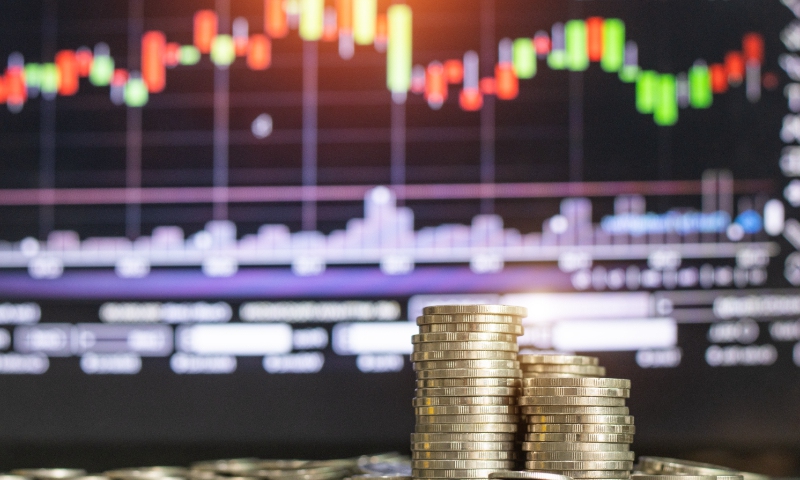
The designation of Deutsche Bank, a key and influential bank in Europe, to serve as the yuan-clearing bank will greatly facilitate and expand the use of the yuan in the EU market, providing more impetus to broader China-EU economic and trade ties, a Chinese analyst said on Tuesday.
The People's Bank of China (PBC), the central bank, announced on Monday that it had decided to authorize Deutsche Bank to serve as the yuan-clearing bank in Frankfurt, Germany, based on a memorandum of understanding with the Deutsche Bundesbank.
The move came as China-EU trade and economic ties continue to deepen and bilateral trade continues to expand, despite recent restrictions imposed by the European Commission.
In a statement sent to the Global Times on Monday, Deutsche Bank said that following the appointment by the PBC, it will facilitate direct end-to-end processing, clearing and settlement services for cross-border yuan transactions for European financial institutions and businesses, acting as a local bridge to China's payment systems.
Deutsche Bank, a global systemically important bank as well as the world's largest euro-clearing bank, said that it is the first foreign bank in Europe to receive this designation.
"Securing yuan-clearing capability in Europe reinforces our role as a trusted global clearing partner and our long-standing support for yuan internationalization. It strengthens China-Europe financial connectivity and enhances our ability to support clients' cross-border trade and investment flows with greater choice and flexibility," Alexander von zur Muehlen, CEO of Asia Pacific, Europe, Middle East & Africa and Germany at Deutsche Bank, said in the statement.
Xi Junyang, a professor at the Shanghai University of Finance and Economics, told the Global Times on Tuesday that while a number of Chinese banks are already performing yuan-clearing functions in the EU, the addition of Deutsche Bank, with its deep roots in the local market, carries great significance.
"Banks have different client bases, and Deutsche Bank has many European companies as its customers. With the appointment, these market participants enjoy a far greater degree of facilitation and ease in tapping yuan use cases," said the professor.
Companies and financial institutions can also avoid risks of foreign exchange losses as they can now directly choose yuan-euro settlement and bypass the use of a third currency, the expert said, noting that China-EU trade and investment ties will be one step closer with a local clearing bank coming onboard.
Tian Lihui, dean of the Institute of Financial Development at Nankai University, told the Global Times on Tuesday that the latest development, some 12 years after the first-yuan clearing bank form a Chinese bank was set up in Frankfurt, marked a milestone as the yuan-clearing system in Europe has evolved from a model where "Chinese entities handle clearing for Europeans" to one where "Europeans handle yuan-clearing themselves."
The decision by one of Europe's largest domestic banks to integrate into the yuan-clearing system signals that China-Europe financial cooperation is moving beyond the shallow level of facilitating trade settlements into the more substantial level of jointly building financial infrastructure, Tian said.
For both China and Europe, this move represents a mutually beneficial institutional alignment, Tian said. "China gains greater depth in the offshore yuan market, while Europe secures an additional strategic option amid the contest of major currencies."
Brussels has recently been intensifying its use of restrictive trade and regulatory tools across sectors ranging from clean technologies to digital infrastructure and foreign subsidies, with many of these measures seen as directly affecting Chinese firms and adding strain to China-EU economic relations.
However, despite these moves, deepening industrial and supply chain integration and the strong complementarity of the two economies have continued to push bilateral trade to new highs. In the first seven months of 2026, China's total trade with the EU stood at 3.67 trillion yuan ($543.90 billion), up 9.5 percent year-on-year, data from China's General Administration of Customs showed on Friday.
As China-EU economic and trade ties continue to expand and deepen, demand for the yuan to be used in the EU market will rise proportionately, and more EU banks will likely be authorized to serve as yuan-clearing banks, Xi Junyang said.
Financial cooperation between the world's largest trading bloc and the largest trading nation has accelerated in recent months. In May, the PBC renewed and expanded a bilateral currency swap agreement with the National Bank of Serbia, increasing the value of the swap from 1.5 billion yuan to 5 billion yuan.
Almost 80 percent of the surveyed Chinese companies operating in the EU plan to expand their investment, even amid tightening policies in the EU and an increasingly complex business environment, according to a report published by the Chinese Chamber of Commerce to the EU and the China Economic Information Service in March. Fostering cooperation in emerging industries and cross-border finance have been highlighted by industry insiders as new growth drivers of China-EU trade and economic cooperation.
The yuan accounted for 3.1 percent of global payments in June, rising from 2.75 percent in the previous month, and ranking as the fifth most active currency for global payments by value, according to a report from the Society for Worldwide Interbank Financial Telecommunication. In terms of trade finance, the yuan ranked second with a market share of 8 percent.
。 美国此次制裁的主要目标集中在三个方面:石油出口、跨境结算,以及对伊朗几乎所有行业的贸易禁令。这些措施如同层层叠加的锁链,将伊朗经济的脆弱环节逐个击破。 针对石油出口的禁令几乎可以说是致命一击。伊朗的石油出口,不仅是其国家收入的支柱,也是其经济运转的命脉。新制裁规定,所有与“伊朗石油”沾边的产品,如凝析油、成品油等,亦被美国一并纳入禁令之中。这意味着,伊朗不仅失去了向传统市场输送原油的机会,还将更多的战略布局化为泡影。 跨境结算的禁令更是将伊朗推向了孤立的边缘。随着美方的制裁令出炉,伊朗的多家银行被剔除出全球金融体系,这无疑意味着它与世界的经济联系被切断。依靠自身的银行体系,伊朗难以完成国际支付,进而影响其货物和服务的流动,加剧了这一国家的经济困境。 美国还施加了禁止美国个人和企业与伊朗进行贸易的限制。

二 | 单从表面来看,这一禁令可能对伊朗造成的直接损失有限,但其背后的力道却意图深远。

三 | 因为此举不仅影响到美伊之间的交流,更在于借助次级制裁的手段,威慑世界其他国家,不许它们与伊朗建立商业联系。

四 | 就在美国宣布制裁后不久,中国外交部立刻作出了反应。中国表示将“密切关注相关动向,采取必要措施维护自身正当权益”。这句简单的话语,却饱含着深远的意义。首先,它传达出中国在伊朗拥有着明显的经济利益,其次,中国不愿意坐视眼睁睁看着美国在全球范围内横行霸道的态度也愈加清晰。

五 | 中方的表态隐含着“如果美国的制裁影响了我们的切实利益,我们将毫不迟疑地进行反制”的坚决信号。这不仅让人联想到美中贸易战时期的“以牙还牙”,也展示了中国在维护自身权益上的决心。随着国际形势的变化,中俄关系、华伊关系日益紧密,这使得美国的制裁计划面临前所未有的挑战。 尽管美国试图通过制裁来压垮伊朗经济,但其实自身的经济状况也并不乐观。美国的国债已超过40万亿美元,相当于政府过去八年的纯税收总额。而每年需要支付的利息更是高达1.4万亿美元,每年两万亿以上的财政赤字,也让这个超级大国的经济脆弱性显露无遗。 在伊朗明显处于劣势的情况下,特朗普的态度却似乎在延续一种冒险的游戏策略。

六 | 准备重金布局波斯湾地区,企图封锁伊朗,是否最终会导致得不偿失?不少分析师认为,这种做法反而可能让美国在未来数年内暴露出更大的经济风险。一旦伊朗的经济已然崩溃,而美国的债务危机却未见缓解,全球金融市场又将掀起怎样的波澜,实在难以预料。 面对复杂的国际形势,中方的决策显得格外稳重。经历过不少风浪后,中国一贯采取“料敌从宽”的战略,务求在动态变化的国际环境中不被置于劣势。在国际博弈中,没有任何一个国家能够永远站在胜利者的地位,因此审慎的姿态显得尤为重要。 中方的谨慎态度不仅是出于对自身利益的保护,更是对未知概率的理性评估。虽然美债失控的概率潜在存在,但在大国间的博弈中,那并非唯一的选择。若要引发更大混乱,完全有可能诱发连锁反应,最终导致各自利益的两败俱伤。可以说,任何经济博弈,不仅关乎某个国家的短期利益,更是对其长期稳定的考量。返回,查看更多。
Current article:http://nka.qingfanceliangsangniang.cfd/list_8ehfplw/pct.html
Published on:05:54:07
相关新闻
- 台湾节目称“北京都没有冰箱” 国台办:脱离事实的言论只会沦为笑柄
- 火花摘「星」一定得
- 吉林洮南绿色燃料拓展至航空领域
- 铁路运输部门统筹运力、多方案 保障旅客假期出行安全畅通
- 《GTA 6》游戏泄露视频再曝,玩家可购买耳机 / 手机壳等
- Northwest China's Shaanxi establishes new rail hub with direct connections to Europe
- 大陆产业升级释放新机遇 两岸专家吁深化合作
- 特朗普再称:霍尔木兹海峡是美国的领土!他还称伊朗非常渴望达成协议
- 小投资大回报!勇士15人名单出炉 缴税打造附加赛球队究竟图啥?
- 启智润心丨让思政课出新出彩
最后更新
- “白海豚”离浙 今明仍有降雨
- Warner Bros Condemns Death Threats Made Against JK Rowling
- 斯基拉:切尔西将正式报价阿哈诺,可能将其外租至斯特拉斯堡
- 【大阪マラソン】初マラソンの吉田響は大失速34位 体中の丸テープに注目集まる 田中総監督が説明「柔軟性を出すため」
- Kartik Aaryan joins global line-up at Red Sea International Film Festival 2025
- 《长城对话》新闻IP研讨会|赵永平:什么内容才是当下传播的“硬通货”?
- 记者:穆里尼奥能为每场失利找到托词,但现在只剩签署辞职信
- 杭州织密城市绿网打造“百姓园林”
- Australians held over alleged SL bribes
- Former Chinese premier Zhu Rongji passes away at 98
热门新闻
- 官方:费利佩·查韦斯和拜仁续约至2028年,随后被租借至马格德堡
- 自然资源部对云南启动地质灾害防御Ⅳ级响应
- 突破100万安培 我国可控核聚变装置运行新记录诞生
- “退网创业”的罗永浩,要回来直播了?“罗永浩”账号登陆淘宝直播平台
- 广东人,又连任了一个外国总统?
- Designation of Deutsche Bank as yuan-clearing bank in EU adds impetus to broader trade
- 「ジムニーノマド」が「受注再開」&「一部改良」!「変更点」や「注文方法」、気になる「納期」は?
- 香港idc机房托管价格
- 小米京东新年升级:小米Mix2手机2399元/秒杀价新低
- 苹果iOS 12.1.3开发者预览版/测试版4